JUDGEMENTALL HAI KYA

A brutal childhood trauma leaves Bobby (Kangana Ranaut) diagnosed with acute psychosis in her adult years. And after doing time at an asylum for assaulting a coworker, she is let off on the condition that she will stick with her medication. Bobby is a dubbing artist for movies, where she is the voice of the female lead characters. And interestingly, her mind is a medley of all the characters she has voiced. For every time she dubs, she gets obsessed with her onscreen avatar and imagines herself in place of the character. This obsession is dealt with a narrative treatment that’s cool and quirky.

To bring out this element of madness in her further, there’s also a busy wall in her house that has photographs of her dressed as every character she has dubbed for. And deep down, Bobby yearns to be an actor herself, something that her manager cum so-called boyfriend, Varun (Hussain Dalal), is unable to pull off. So he ends up grocery shopping with her more often than ‘getting lucky’ on dates. When he protests, she tells him without batting an eyelid, “Tum aloo ke jaise nahin ho sakte… easy going and adjusting. Be like aloo.”

In the midst of this existence, enter Keshav and Rima (Rajkummar Rao and Amyra Dastur) as her new tenants and a much in love couple. And Bobby gets drawn to their love story, which in her world is too good to be true. But then a murder breaks this momentum and Bobby believes Keshav is the culprit. Is it her overactive imagination, or is it her paranoia to the power ten that has led her to do this instead? The characters here are twisted… and you are left wondering, trying to figure which of the two has blood on their hands.

Bobby is always in a zone – that’s funny and alarming – and in her contorted world, she imagines characters and hears voices. Interestingly, the story leads to a frenzied turn of events, with Bobby’s imaginary world often blurring into shocking reality.

Prakash Kovelamudi’s narrative style is quirky, edgy and one that absorbs you instantly. The mood is set with shots in dappled light, play of light and shadows and high contrast shots. The stylisation of the scenes, characters and sound design ensures that the atmosphere remains intriguing throughout the story.

To give it another dimension, the film brings in an underlying motif of the Ramayana, albeit with a modern day twist. At one point in the film, Bobby tells Keshav, “Ab Sita Ravan ko dhundegi.” ‘Judgementall Hai Kya’ keeps you engaged all the way, though the screenplay in the second half does go a bit awry at times, with some scenes that seem stretched. The climax, something that you’re waiting for, is hurried. Nonetheless, it is worth the wait.

The performances are consistent throughout and it’s delightful to see such talented actors feed off each other. Kangana Ranaut is brilliant as Bobby, as she seamlessly gets under the skin of her character, nailing the quirks and nuances. Even her styling makes a statement without going overboard. Rajkummar Rao, fits into his slightly macho, edgy persona like a glove. We haven’t seen him in a role like this before and he pulls it off fantastically. Jimmy Sheirgill impresses as he breaks out of the one note characters he has been playing lately. Amrita Puri, too, holds her own very well. And Hussain Dalal brings in the comic quotient quite effectively.

‘Judgementall Hai Kya’ keeps the element of suspense alive all the way till the end. The film pushes the envelope as a dark, psychological whodunit, with a social message weaved in that can’t be ignored. The film treads into a zone where Bollywood has rarely been, and just for that, it deserves applause.
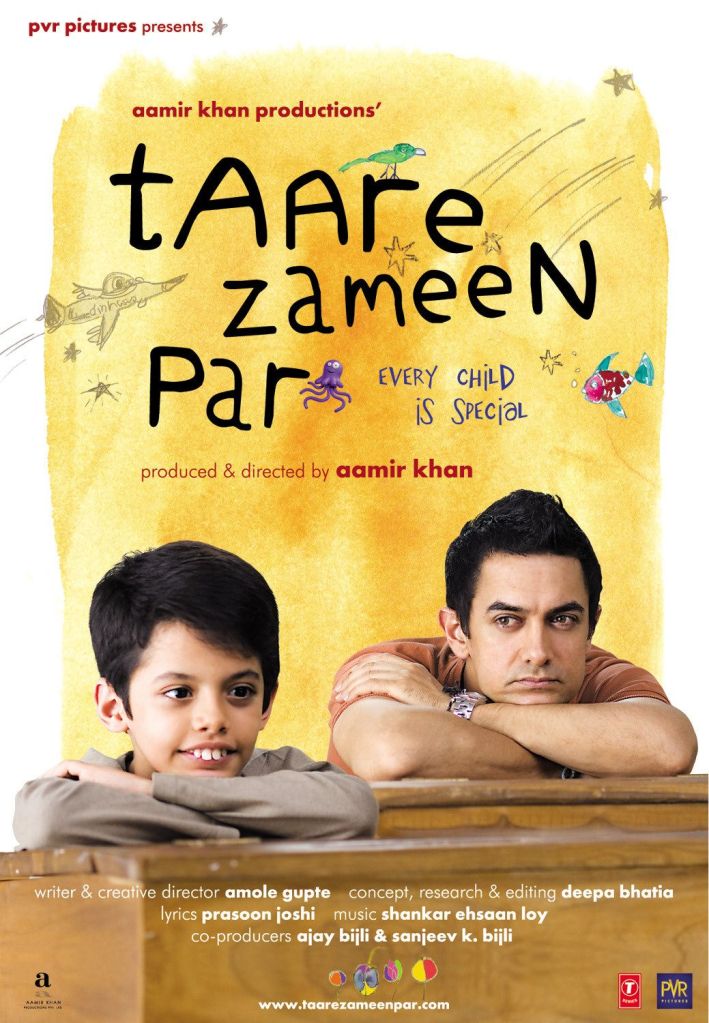

TAARE ZAMEEN PAR


Kudos to Aamir Khan for proving us wrong by giving us a brilliant dekko into the mysterious, magical mind of a child who really doesn’t know why befuddled adults are hell-bent on mutilating everything’s that beautiful, innocent, free and fulsome…All because they feel there is no faayda (profit) in it.

Ostensibly, the film is about children with special needs and the story revolves around the efforts of a dyslexic child to fit in, adjust and perform in a ‘normal’ world where competition is the norm and regimentation the principle.

A world where it is natural and ‘normal’ to rap eight-year-old knuckles and discipline with verbal abuse and physical battering, if a child gets his spellings wrong, forgets to do his homework or fails to give a copy book answer. But the canvas of the film is so sensitive, so vast, so meaningful, it includes any and every child in its ambit. So much so, Taare Zameen Par becomes the story of any and every child who is being robbed off his childhood by insensitive parents and teachers who believe their job is to create race-winning rats for the rat race rather than Einsteins, Edisons, Agatha Christies and Leonardo Da Vincis.

Eight-year-old Ishaan (Darsheel) is a happy-go-lucky child with a fertile imagination that can see fish flying but fails to grasp the difference between B and D. When asked to solve his three times table, he confidently picks up his pencil and sees a war of planets on the firmament of his mind where planet 3 smashes into planet 6 and beats it into smithereens.

Naturally, the answer of 3 x 6 is 3 for our little genius. But that’s between you and me. Berated by the teachers, his parents send the kid away to a boarding school and deliver him to a living hell, where he faces ridicule and begins to lose all self-esteem in his effort to fit in. It takes an unconventional art teacher (Aamir Khan) to bring him out of his solitary confinement and unleash a whole new energy force that blinds the boring world with its colours and configurations.

The story is simple and connects instantly with every adult and child in the auditorium, even as the climax is predictable and plays heavily on your emotions. But what uplifts the film is its very simplicity, sensitivity and its performances. On the one hand, there is the non-filmy script which doesn’t make anyone the villain…even the adults are victims of ignorance. On the other, there is the towering portrayal by young Darsheel who trapezes between lively and lost with great agility.

And holding it all deftly together – the tears and the smiles, the lows and the highs – is Aamir Khan who makes a measured directorial debut. Almost as measured and meticulous as his performances. Of course, the second half does get a bit repetitive, the script needs a bit of taut editing, the trauma of the lonely child seems a shade too prolonged and the treatment simplistic. But the film never does stop tugging at your heartstrings.

We recommend a mandatory viewing for all schools and all parents.

LOVE AAJ KAL

When you make a riotous romance like Jab We Met, you really can’t blame the audience for expecting the moon and the sky with your next film.

Chalo, let’s get drunk with one more heady potion of Pyar, Imtiaz ishtyle, you tell yourself before sauntering in for his latest, Love Aaj Kal.

And no, you aren’t disappointed at all. Because, this time, the effervescence and adrenalin rush of impetuous love, resonant in the romance of Geet and Aditya in Jab We Met, has been replaced by a more serious and realistic take on modern love. The film literally holds up a mirror to the commitment phobia of the young, successful professionals who keep changing their status from `committed’ to `single’ on the sundry social networking sites. Much to the chagrin of their dads and mums who fail to understand this emotional dilettantism and keep badgering them with love-of-a-lifetime cliches.

The secret of director Imtiaz Ali’s film making lies basically in three primordial areas. Instead of relying heavily on a three-hour long script, he chooses to concentrate on his dialogues: crisp, concise and completely in sync with aaj ka lingo. All of Saif’s babblings about love sans marriage and Deepika’s discourses on career and cumbersome commitment are straight out of real-life ramblings in pubs, discotheques and coffee shops.

Secondly, it’s the characterisations that literally set the screen on fire, with their highly individualistic streak coupled with their sad vulnerability. Here again, Saif Ali Khan’s Jai and Deepika’s Meera aren’t your run-of-the-mill Romeos. While cool dude Jai dreams of building bridges like the Golden Gate and cannot see romance coming in the way of his career, restoration artist, Meera too feels long distance relationships are a drag when she decides to move from London to repaint frescoes in Delhi. Refreshingly, this romance actually begins with a break and then goes through umpteen twists and turns, before the new age Jai realises he ain’t much different from the old-fashioned Veer (Rishi Kapoor) who lived out the Heer-Ranjha story in the less cluttered 1960s. Both Jai and Meera try to live out their lives independently, simply as friends, pursuing their careers and different love interests. But ironically, they keep bumping into each other at odd junctures of their life, babbling incoherently (and funnily) to avoid the senty soulmate signals. And Saif’s absolutely delightful with his gibberish take on I’m okay, you’re okay, we’re okay, while the scene’s actually yelling out something else.

Thirdly, like Jab We Met, this film too scores in the lush atmospherics that anchor the drama so exotically. London, San Franciso are fine, but it’s actually Delhi that once again sweeps you off your feet as it stands by as a sweet and vibrant witness to the wooing and shooing, both in the 1965 romance and the 2009 something-like-love story. Playing a major role in creating the right ambience is Pritam’s foot tapping music score too which boasts of a number of chartbusters.

On the flip side, the first half does ramble a bit and takes time to build up into a riveting second half. But the alluring performances by the lead pair do cover up for the langorous bits. Deepika is definitive and strong as Meera, the modern girl who has an individuality of her own. But it is Saif who renders so many shades to his character to make it seem so very real: confident, confused, careerist, homebody, fancy-free, foolishly in love.

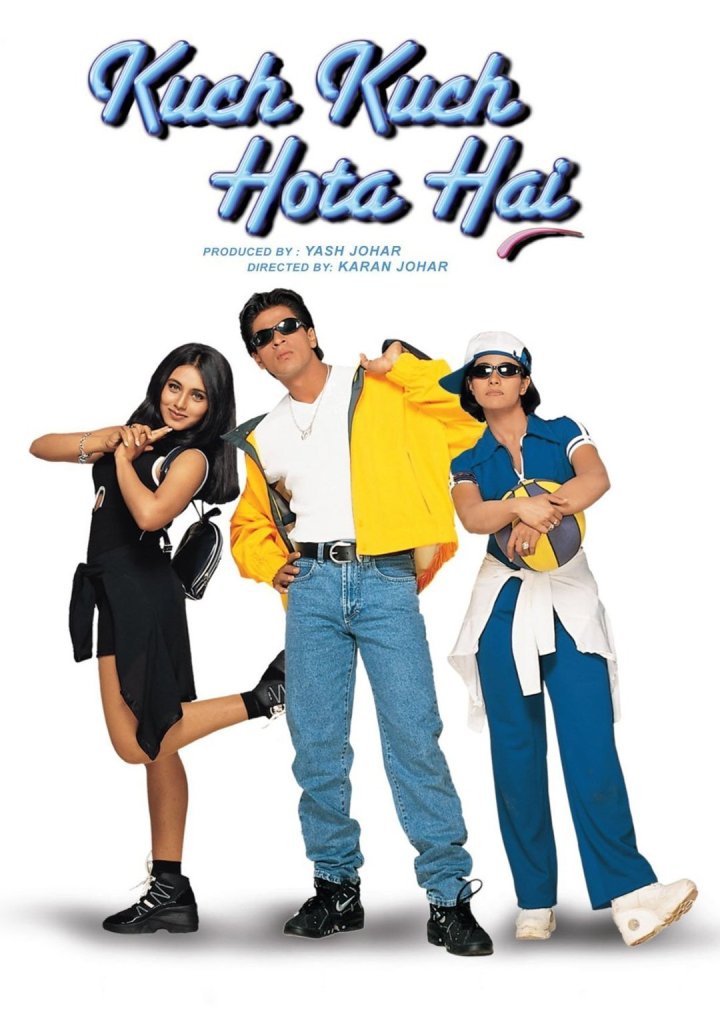
KUCH KUCH HOTA HAI

Director: Karan Johar
Cast: Shah Rukh Khan, Kajol, Rani Mukherjee

Kuch Kuch Hota Hai is a film that drills in the old adage – to be in love you have to first be the best of friends.

A love triangle with little difference, Rahul Khanna (Shah Rukh Khan) and Anjali Sharma (Kajol) are the best of friends who paint the campus red. Tina (Rani Mukherjee) is the Oxford-educated, bhajan-singing daughter of the college principal (Anupam Kher) who returns from London and has Rahul fall promptly in love with her.

So while Rahul and Tina do the necessary song and dance sequences amidst castle ruins in the English countryside, Anjali also falls in love with her best friend. So far so predictable then.

To cut a long story short, Rahul and Tina marry, the latter dies leaving behind as her legacy a bunch of letters (the oft-repeated flashback device) and a daughter to reunite her father with old friend Anjali.

The racy beginning of the film is marked by a sparkling chemistry between Khan, Kajol and Rani. Consummate performers in their own right, Khan with his powerhouse of energy and Kajol with her natural exuberance are quintessential yuppies.

Yet, more than once they tend to go over the top. It is, however, the gorgeous Rani who steals the show. Oozing oomph from every pore, she also proves herself an actress whose time has come.

In his much-hyped debut film, director Karan Johar tries to rekindle the Khan-Kajol magic of the phenomenally successful love lore Dilwale Dulhaniya Le Jayenge in which he assisted director Aditya Chopra. And he almost does.

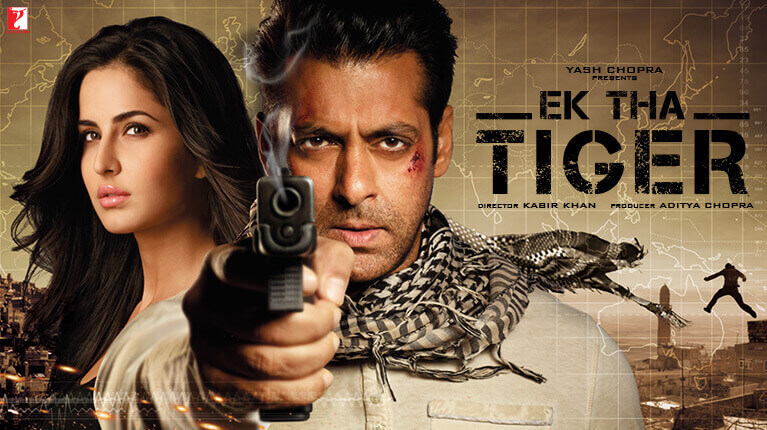
EK THA TIGER

Kabir Khan’s movies—Kabul Express; New York, Ek Tha Tiger start with the similar sepia-toned skyline montages of what could be Afghanistan, Iran, Iraq; strife-ridden country associated with extremists. In ETT, the montages pass quickly. A voice-over tells you of how Governments fight shadow battles of espionage and intrigue with faceless agents.

Cut to India’s finest RAW (Research & Analysis Wing) agents Tiger–Salman Khan. He enters the screen, dramatically, shoes first, kicking butt in a crowded bazaar; with his trade-mark checked scarf around his neck. He ambushes a handful of traitors single-handedly in a long-drawn high octane action sequence that is clearly inspired by Jason Bourne(Bourne Identity/Supremacy series) and James Bond (Quantum of Solace). Mission one successfully completed Tiger returns home to a middle-class neighbourhood in New Delhi.

Barely have his wounds from Iraq healed when his boss, Girish Karnad, (impressive performance) packs him of to Ireland to spy on a professor (Roshan Seth) who may be trading missile technology secrets with Pakistan.

Before he sets out, the boss ominously warns Tiger how agents must never let their hearts rule their head. But when Cupid strikes even Tigers become pussy-cats. The spy is drawn to college girl Zoya(Katrina Kaif) and he’s almost ready to settle down with her, when the twist in the plot is revealed. Kat is a secret agent for the ISI (Inter-Services Intelligence); she owes allegiance to India’s archenemy Pakistan.

Post interval, ETT goes on to focus on the Tiger-Zoya romance. Since they have unfinished business, the plot allows them to lock eyes at a peace summit in Istanbul. Passions are rekindled. This time they let their own feelings rule and elope. Chased by their own people and the enemy, the couple traipse in Cuba and other foreign locales, riding bikes and cuddling up while some lack-lustre songs play in the backdrop. One must say there is nothing raw about the Kat-Sallu romance in ETT; it’s synthetic.

Leaving the plot open for a sequel, just in case Salman’s fans demand one; ETT ends with telling you how Tiger’s file went missing because, once this super-spy decided to go off the radar, no intelligence agency could actually track him down